Splash Pads, Lazy Rivers and Waterslides: Building a Family Amenity Center
An amenity center is built for a crowd, and that changes the engineering, the layout and the long-term plan.
October 26, 2026 · 4 min read
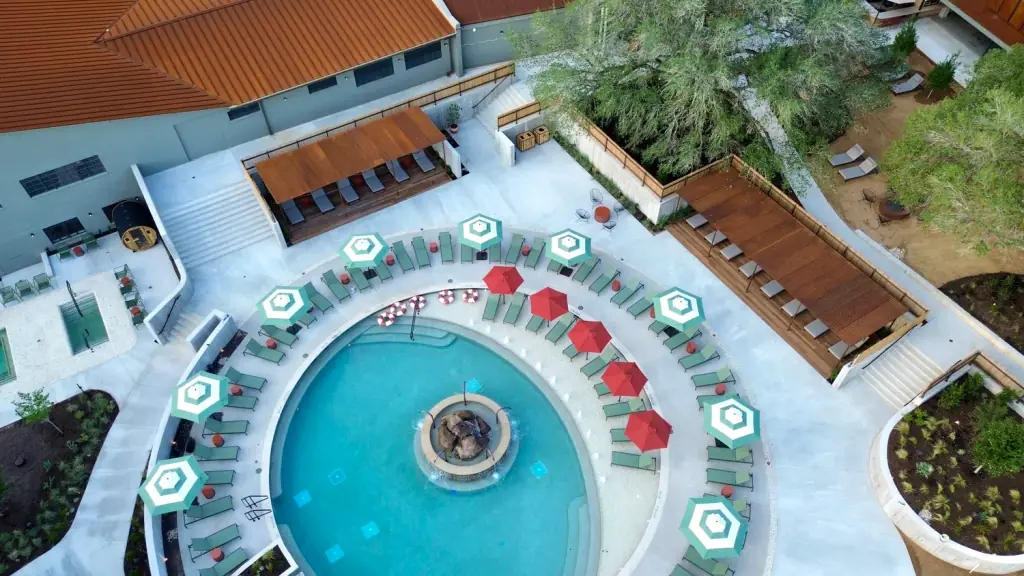
A backyard pool is built for a household. An amenity center is built for a crowd: kids at the splash pad, parents in the shade, teenagers at the slide, grandparents floating a lazy river. The design problems are different, and so is the long-term commitment. Aqua Builders describes itself as one of the few firms in the country that can design, build and maintain large scale water parks and family fun environments, including splash pads, multi-level play structures, water rides and waterslides, and interactive water features and toys. Here's what that involves for community developers, resorts, and families with a big piece of land.
Splash pads: water play without standing water
A splash pad has no deep water. Instead it has sprays, jets, arches and buckets set into a textured surface, and children run through them. That sounds simple, but a splash pad is a full water system: a supply, drainage so water leaves the surface, a way to treat and recirculate the water or manage it as it drains, and controls such as timers or activation buttons that decide when features run.
Surfaces deserve attention. Wet children run, so the finish underfoot has to give grip, and the color has to stay comfortable on a Texas afternoon. Play features should be chosen for the ages who will use them, with gentle ground-level spray for toddlers and bigger, more dramatic features for older kids. Aqua Builders' background includes a children's water feature at Chris Park in San Antonio, and a splash pad appears in the firm's before-and-after gallery. Rules for public and semi-public water play vary by location, so it's wise to confirm local health requirements at the start of design instead of the end.
Lazy rivers: a loop that has to keep moving
A lazy river is a channel of water that's kept moving in a loop so swimmers and floaters drift along. The engineering challenge is circulation. Pumps and return jets create the current, and the channel's width, depth and shape determine how that current behaves. Too narrow and it speeds up. Too wide and it stalls in the corners. Entry and exit points, shaded rest areas and features along the route, like a waterfall or a bridge, turn the loop from a ditch into a destination.
The firm's portfolio includes the lazy river at the Belvedere community, and the same flow-rate thinking that appears in a standard piping isometric, with GPM by pump speed, scales up to a loop of this size. A lazy river is also a lot of surface to keep clean, which is why maintenance belongs in the first design conversation.
Waterslides: structure, flow and runout
A waterslide is a structure, a plumbing system and a landing zone working together. The structure has to be supported properly, and on a hillside the slope itself can do part of the work. A steady water supply keeps the surface slick and the ride predictable. And the landing, where a rider enters the pool and slows down, drives the shape of the pool around it. Slide manufacturers publish their own requirements for landing areas, and those requirements should shape the layout rather than be squeezed in afterward.
One of Aqua Builders' residential projects, Driftwood Ranch, is a family waterslide on a Hill Country ranch, built in partnership with Glen Screws Construction. It's a good example of how a big feature gets threaded into the landscape: the grade, the stone and the water all have to agree.
Multi-level play structures and interactive features
Larger sites often add multi-level play structures with climbing, spraying and dumping features, plus interactive toys that let kids control the water. These bring a layered set of design questions: sight lines so adults can see children from the shade, circulation so lines don't back up at the stairs, and surfaces that handle heavy foot traffic. The water park at The Reserve at Lake Travis, the Cypress Club, is one of the amenity projects in the firm's background.
Why one team for design, build and maintenance
An amenity center gets used hard. Every feature has moving water, wear and chemistry, and the people who built it know where the stress points are. Having one firm design, build and maintain the project means the person who sizes the pump also hears when it struggles. Aqua Builders offers full-service monthly swimming pool maintenance, along with cosmetic and full renovations, so the relationship doesn't end on opening day.
There's also the question of phasing. The firm's master planning includes phased installation, which lets an owner build the core of a family environment first, such as the pool and the splash pad, and add a slide or a lazy river later without tearing up what's already there. Plan the pipe sizes, equipment room and utilities for the final vision even if you build in stages.
Planning checklist for a family amenity project
- Who will use it, and what ages need to be served first?
- Which features are built now, and which are planned for a later phase?
- Where does the water come from, where does it drain, and how is it treated?
- How do guests move through the site, and where are the shade and sight lines?
- Who will maintain it, and how often will they be on site?
If you're planning a community amenity, a resort attraction or a ranch with room for the whole family to play, start with a conversation. Call Aqua Builders at (512) 722-3636 or email sales@aquabuilders.com, and a project manager will contact you about beginning the proposal process.
Aqua Builders, (512) 722-3636
Call (512) 722-3636More articles
What a Full CAD Pool Set Contains, and Why You Want One Before Excavation
The rendering sells the idea, but the CAD set is the document a crew, an engineer and an inspector actually build from.
Light, Fire, Sound and Motion: Designing a Pool for Day and Night
Four elements decide whether a backyard pool is only for swimming or a place people want to stay until late.