After the Pool Is Full: Monthly Maintenance, Water Chemistry and When to Renovate
A pool is a system that runs every day, and how it's looked after decides how it looks and feels for years.
October 26, 2026 · 4 min read
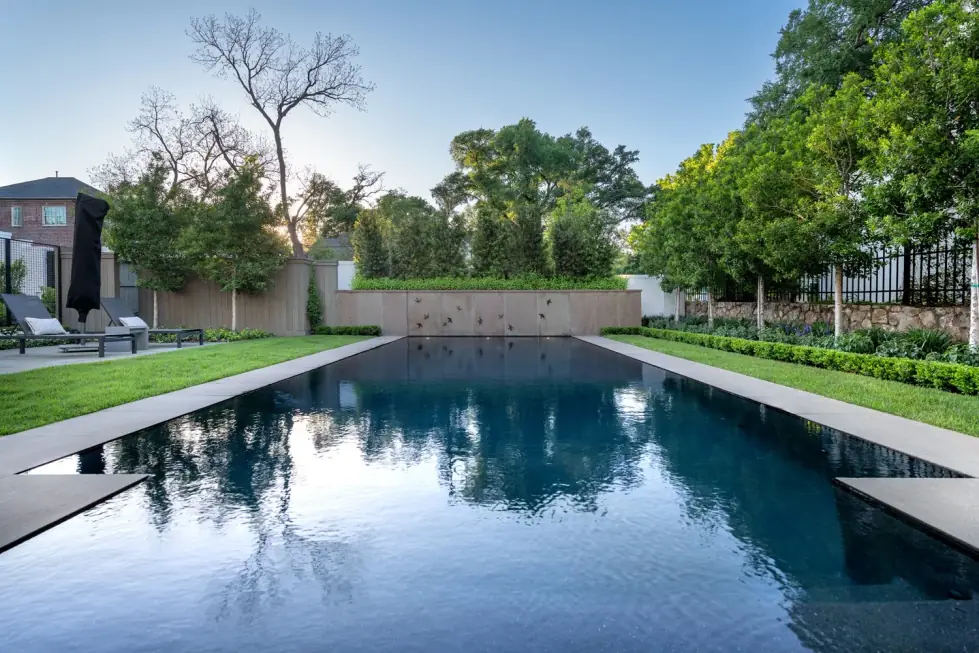
The day the pool fills is the beginning of a long relationship with it. Water, sun, leaves, swimmers and sunscreen all work on the pool every day, and the equipment that circulates and cleans the water runs for hours at a stretch. A well-designed pool is easier to look after, but no design removes the need for care. Here's what ongoing maintenance involves, how water chemistry works in plain language, and how to tell when a pool is ready for renovation instead of another repair.
What full-service monthly maintenance looks like
Aqua Builders offers full-service monthly swimming pool maintenance as part of its continued services. In general, a good maintenance program does three things. It tests and balances the water. It cleans: skimming debris, brushing surfaces, emptying baskets and keeping filters in working order. And it inspects the equipment, watching pumps, heaters, lights, valves and controls for early signs of trouble.
The inspection is the part owners tend to underestimate. A technician who sees your pool regularly notices a pump that has started to sound different, a light fixture that's fogging, or a line that's losing pressure. Small issues caught early stay small. When the same company designed and built the pool, the technician also knows what the equipment room was meant to look like and what the circuits were designed to do.
Water chemistry in plain terms
Water chemistry sounds technical, but the basics are simple. A few measurements keep pool water safe, comfortable and gentle on the finish and equipment:
- Sanitizer: the chemical that keeps bacteria and algae in check, and the one that's consumed fastest in hot, sunny weather.
- pH: how acidic or basic the water is. It affects comfort for swimmers' eyes and skin, how well the sanitizer works, and how kind the water is to surfaces and metal.
- Alkalinity: a buffer that keeps pH from swinging wildly.
- Calcium hardness: how much dissolved calcium the water holds. Water that's too soft can pull minerals from plaster and stone, while water that's too hard can leave scale on tile and equipment.
- Stabilizer: a protectant that helps outdoor sanitizer last longer under Texas sun.
These measurements affect each other, which is why balancing them is a skill and not a single scoop of chemical. The Aqua Builders team describes itself as highly knowledgeable about water chemistry and says it takes pride in bringing the highest level of water quality to its clients' outdoor features. That matters most for spas and hydrotherapy features, where water is warmer, volumes are small and the chemistry moves quickly. Your technician can tell you the target range for your particular pool, finish and equipment.
Finish and design affect upkeep
Some of what makes maintenance easier is decided during design. A dark interior finish, like the black-bottom lap pool pictured here, makes water read deeper and mirrors the sky and nearby trees, but it also shows debris differently than a light finish does. Good skimmer placement and circulation help move leaves and surface dirt toward where they can be removed. A clear equipment room layout lets a technician reach every component. These are all decisions in the CAD set, long before the first bag of chemicals is opened.
Signs a pool may be ready for renovation
Even a well-kept pool eventually shows its age. The real question is repair or renovation. Signs worth paying attention to include:
- A rough, stained or blotchy interior surface that cleaning no longer improves
- Coping, tile or decking that has cracked, shifted or come loose
- Older equipment that is noisy, inefficient or hard to service
- Lighting that looks dated or no longer works as a system
- A layout that no longer matches how your family uses the yard
- A spa, water feature or fire element you've always wanted but never had
Cosmetic renovations and full renovations
Aqua Builders handles both. A cosmetic renovation refreshes what you see: a new interior finish, new tile, new coping, updated lighting, a fresh look for the surrounding hardscape. A full renovation reaches deeper, reworking equipment, plumbing, structure or the shape of the pool itself. Many projects land somewhere in between. The firm's before-and-after gallery includes a Lake Austin contemporary, an O'Connor glass wall, the Texas A&M University pool and the Driftwood Ranch project, and its portfolio includes remodels such as the Tarrytown Remodel and the Clarksville Historic Remodel.
A renovation is also a chance to add the elements of a complete design: light, fire, sound and motion. A pool that was built for swimming can gain a fountain, a spillway, a fire bowl or a spa. The firm also offers wellness elements, including home wellness collections with partner products from Thermasol, which makes steam showers and digital shower systems, and Bradford Products, which makes stainless steel pools and hydrotherapy spas.
Keeping a line open after construction
One client review of Aqua Builders on Google mentions that you can call or text from design all the way through completion of the pool and after. That's the right standard. Maintenance and renovation work best when the people who know your pool are a phone call away, with the original plans on hand.
If your pool is new and you want a maintenance plan, or it's showing its age and you want an honest look at your options, call Aqua Builders at (512) 722-3636 or email sales@aquabuilders.com to start the proposal process.
Aqua Builders, (512) 722-3636
Call (512) 722-3636More articles
What a Full CAD Pool Set Contains, and Why You Want One Before Excavation
The rendering sells the idea, but the CAD set is the document a crew, an engineer and an inspector actually build from.
Light, Fire, Sound and Motion: Designing a Pool for Day and Night
Four elements decide whether a backyard pool is only for swimming or a place people want to stay until late.